By the Nordfinanz team
Making the most of KfW & subsidies
Which subsidy programmes are available from KfW, NBank and proKlima, and how to combine subsidies cleverly with your mortgage.
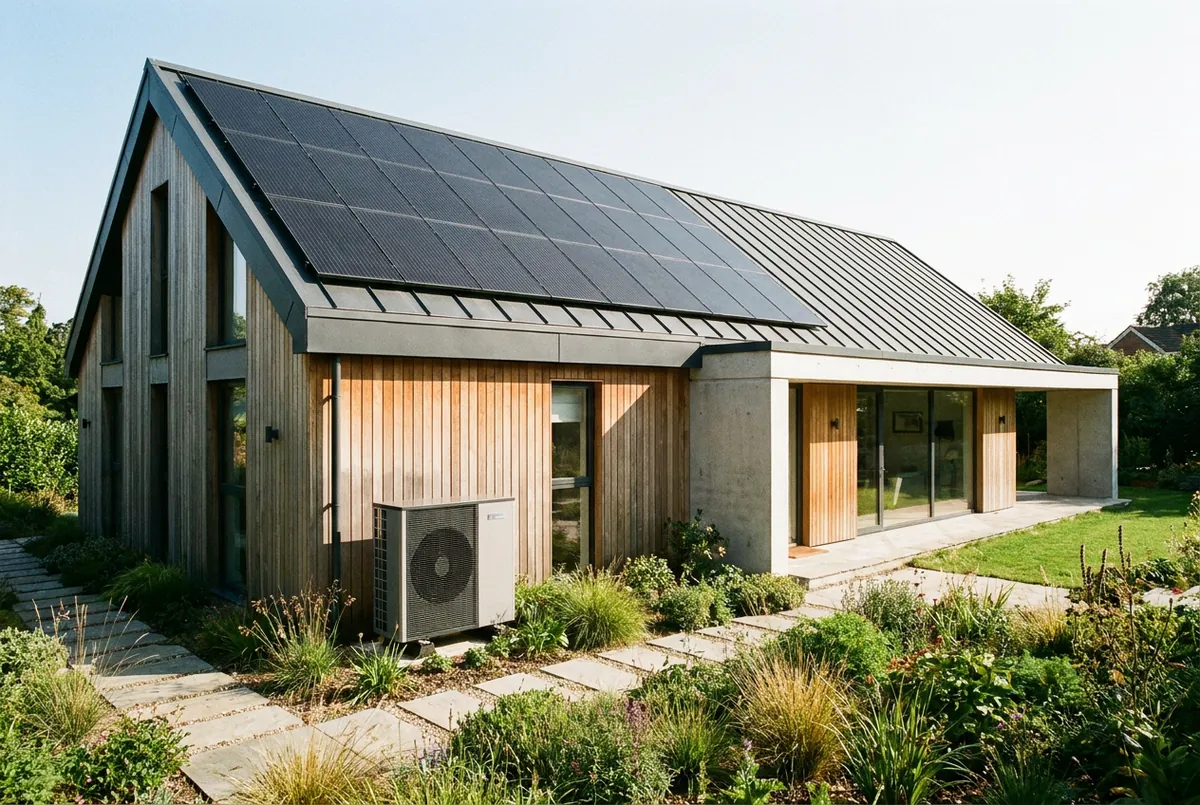
Subsidies are hard cash but are often overlooked or applied for too late. If you plan early, you can combine low-interest subsidised loans and grants cleverly with classic mortgage financing.
KfW: loans and grants
KfW supports the construction, purchase and renovation of energy-efficient properties with low-interest loans and in some cases repayment grants. There are also programmes for age-appropriate conversion or home ownership for families.
The following overview shows a selection of the most important programmes for private buyers and owners. Terms and requirements change constantly; we check the current status for your specific project.
| Programme | What for | Type of support |
|---|---|---|
| KfW 297/298 Climate-friendly new build | New build and first purchase of particularly energy-efficient houses | low-interest loan |
| KfW 300 Home ownership for families | Families with children below certain income limits | low-interest loan |
| KfW 261 Residential building loan | Renovation to an efficiency house or purchase of a freshly renovated house | loan with repayment grant |
| KfW 458 Heating subsidy | Replacement of old heating systems with e.g. a heat pump | grant of 30 to 70 % |
| KfW 159 Age-appropriate conversion | Removal of barriers in existing buildings | low-interest loan |
| NBank housing subsidies | State programmes of Lower Saxony, depending on income and project | loans and grants |
| proKlima | Climate protection fund in the Hannover area, e.g. for renovations | regional grants |
Worked example: heating replacement
A heating replacement shows how much support can come together. Under the heating subsidy, costs of up to €30,000 are eligible for the first residential unit. The basic subsidy is 30 percent; with bonuses such as the speed bonus for early replacement and the income bonus, up to 70 percent is possible. An investment of €30,000 thus turns into a grant of €9,000 to €21,000. The remaining amount can be financed through a low-interest supplementary loan.
Combining subsidies and mortgage financing
Subsidised loans replace part of the normal bank loan and thus lower the blended interest rate of the entire financing. An example: instead of financing €400,000 entirely through the bank, €100,000 runs as a low-interest KfW loan and €300,000 as a classic annuity loan. The KfW funds are applied for and released through the financing bank; a separate application to KfW itself is not provided for the loan programmes. That is exactly why the subsidy check belongs in the financing planning from the very start.
It is also important to know that subsidies do not replace creditworthiness. The bank checks your financing, including the subsidy components, like any other loan. Well structured, however, subsidised loans improve the overall terms and create room for a larger buffer or a higher repayment.
Mind the order
Many subsidies must be applied for before the purchase or start of construction. If the order is not followed, the entitlement lapses. This is exactly where early advice pays off.
As a rule, the start of the project is already deemed to be the conclusion of a supply or service contract; for a property purchase, the notarised purchase contract. If you sign first and ask about subsidies afterwards, you usually come away empty-handed. Also allow some lead time, because some programmes require confirmation from energy efficiency experts before the application can be submitted.
Extra support at regional level: NBank and proKlima
Besides KfW, it is worth looking at the state and regional level. As Lower Saxony’s development bank, NBank grants, among other things, interest-subsidised loans for households below certain income limits. In the Hannover area, the enercity fund proKlima is added, which subsidises renovation measures and efficient building technology, among other things. Such regional programmes are often less well known, and that is exactly why they are worth an application.
We check automatically
With every mortgage we check suitable programmes from KfW and NBank as well as regional programmes such as proKlima for your project. You do not have to work your way through the subsidy jungle yourself. In the initial consultation we look at your project and tell you exactly which subsidies are realistic and how they affect the instalment and total costs.
Common mistakes in subsidy applications
In practice, subsidy applications rarely fail because of the requirements and frequently because of the procedure. The classic mistake is signing the contract too early, which triggers the start of the project and lets the entitlement lapse. It is similarly annoying when the loan has already been signed with your current bank and the subsidies therefore no longer fit into the structure. Combining several programmes also needs planning, because the same costs may usually only be subsidised once. Knowing the order and submitting the applications before signing avoids all these traps without extra effort.
Subsidies when buying an existing property
Buyers of older houses can benefit too. While the new-build subsidies are aimed at efficiency houses, the renovation subsidies apply precisely to existing buildings. If the house is renovated to an efficiency house after purchase, the loan and repayment grant from the residential building programme come into question, and there are separate grants for individual measures such as new windows, insulation or heating replacement. It makes sense to roughly calculate the renovation roadmap before the purchase and to build the subsidies into the financing from the start. Whether a programme is currently open and how well the funding pot is filled sometimes changes over the course of the year, which is why an early enquiry pays off twice.
Sources
Related
Your situation is individual? Let’s talk about it, in person and without obligation.
Book your initial consultation